what is the EHOC?
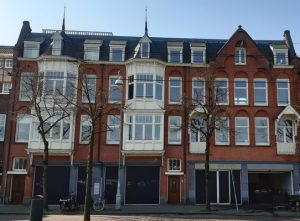
The Etty Hillesum Research Centre is situated on St. Peters Square in Ghent, Belgium.
On 13th June 2006, the Etty Hillesum Research Centre (EHOC) was officially opened as part of Ghent University with a celebration at Sint-Pietersplein 5. This newly founded Centre coordinates and stimulates research on the Letters and Diaries of Etty Hillesum, written during the period of World War Two. In the last twenty years, these valuable manuscripts received global attention and recognition. Researches of various disciplines and different Universities worldwide, connected to the EHOC, dedicate their studies to careful analysis of Hillesum's writings. The aim of the EHOC is to create an international network of research.
What is the Etty Hillesum Research Centre and what is it trying to do?
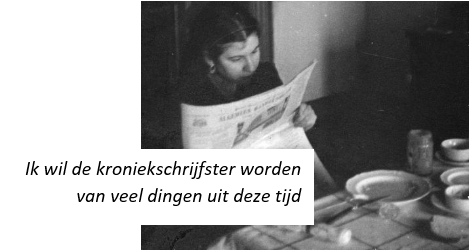
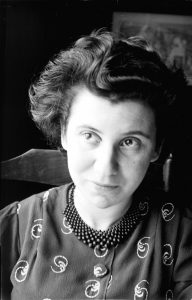
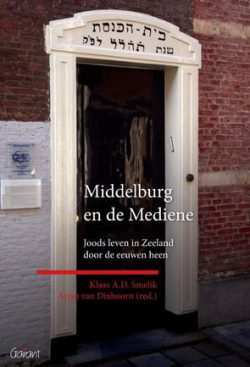
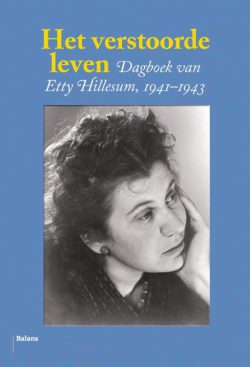
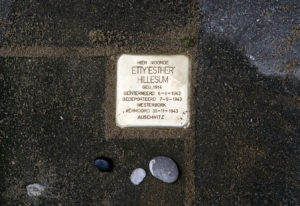
The Etty Hillesum research Centre is named after Etty Hillesum (Middelburg 1914-Auschwitz 1943). As a young Jewish woman midway WWII, Hillesum had the ambition to become a writer. She was uncertain, however, about her own talents to do so. On request of her "psychotherapist" Julius Spier (Frankfurt a/M 1887 - Amsterdam 1942) she started to keep a diary from March, 8 1941 onwards.
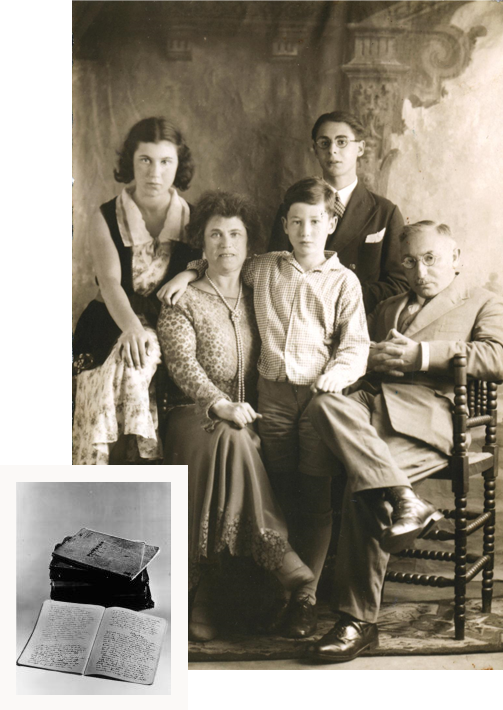
Besides exercises to order her chaotic life, this diary became for her a place of writing. When she left her home in Amsterdam for an insecure future, she gave her writings to a female friend who lived with her. She in turn gave them to the writer Klaas Smelik (Den Helder 1897- Amsterdam 1986). He would try to publish the
In the fifties, Klaas Smelik tried hard to contact a Publisher, but he could not find anyone who would be interested in the diary cahiers (plus a collection of Etty Hillesum's letters). His son, Klaas A.D. Smelik (born in Hilversum 1950) contacted the publisher Jan Geurt Gaarlandt who fo
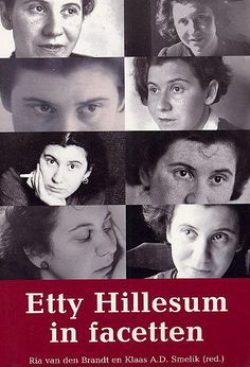
Gaarlandt's successful publication of Hillesum's work developed rapidly into a huge interest in Etty Hillesum, both as a person as well as in her Collected Works; The Letters and Diaries. Not only was there an international interest among readers, Universities and researchers worldwide started to become involved in studying her Work. In France, Italy, The Netherlands, Belgium and the United States studies on Hillesum were published [Note: More information in Ria van den Brandt & Klaas A.D. Smelik, Etty Hillesum in "facetten" (Etty Hillesum Studies 1), Budel, Damon, 2003]. A disadvantage, however, was that scholars had to work with the incomplete and unscientific texts and their translations. This development lead to unfounded criticism and opinions on Etty Hillesum, which are now hard to recover.
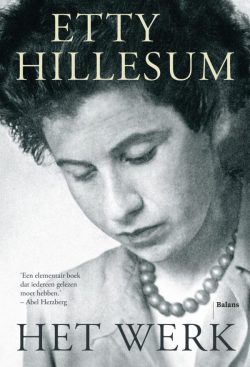
A significant and historical moment was the step forward made by Prof. Dr. Klaas A.D. Smelik to publish the Complete and Unabridged scientific edition of the Letters and Diaries. First it came out in its original languages: Dutch, German and some Russian words: Etty: De nagelaten geschriften van Etty Hillesum, Amsterdam, Balans, 1986; second edition: 1987; third edition: 1991; fourth edition: 2002; fifth edition: possibly in 2008. Later it came out in English: Etty: The Letters and Diaries of Etty Hillesum 1941-1943. Complete and Unabridged, Grand Rapids, Eerdmans, 2002. The French and Italian Complete editions are to be expected in the near future.
From experience we have learned that researchers easily work in their ivory towers not realising that there might be others too who pursue similar activities elsewhere. To prevent that the wheel is invented time and again, a central coordination worldwide of Etty Hillesum research is needed. Ghent University offered this opportunity in founding the Etty Hillesum Research Centre (EHOC), with the Etty Hillesum Foundation in Amsterdam as financial support. In 2006 the EHOC became part of the UGent at the Department of Languages and cultures of the Near East and North Africa (http://www.neareast.ugent.be). The Centre is directed by Prof. Dr. Klaas A.D. Smelik, who edited and published the Complete edition of the Letters and Diaries, he is professor Hebrew and Judaism at Ghent University. The staff members of the EHOC carry out the daily tasks of the centre and work on their own Hillesum research.
What are the aims and objectives?
* To provide opportunities for research and exchange for scholars world-wide working on Etty Hillesum's writings.
* To archive the international research material on Etty Hillesum and to develop the bibliography accordingly.
* To expand and deepen our own research on Etty Hillesum.
* To publish the series ‘Etty Hillesum Studies'.
* To initiate projects and supervise the various translations of Etty Hillesum's writings in different languages.
* To develop a website, which will present the different research activities, both local as well as on an international level.
* To open up the centre of Etty Hillesum documentation for scholars and graduates world-wide.
* To organise symposiums, seminars, courses, conferences and debates.
* To offer professional academic support and supervision for those who wish further guidance in their work.
* To expand our contacts with the different organizations interested in Etty Hillesum.
By means of this website the Etty Hillesum Research Centre hopes to encourage and support study on Etty Hillesum's The Letters and Diaries in providing detailed information. It wants to create the opportunity for scholars and those with general interest in Hillesum to contact us for the exchange of ideas, insights and data. We hope in this way to contribute to the research and to the influence of Etty Hillesum's Writings and thought.
EHOC Staff member Meins G.S. Coetsier